

The best kids earrings are comfortable, lightweight, and made with smaller ears in mind. A pair may look adorable in a product photo, but parents also need to consider its materials, size, weight, backing and suitability for their child’s age.
That can feel like a lot to check for something so small. This guide explains what to look for when choosing safe earrings for kids, which styles work well at different ages and how to keep earrings clean and comfortable.
What Should Parents Look for in Kids Earrings?
A good pair of children’s earrings should combine comfort, durability and an age-appropriate design. Before buying, parents should check:
-
Whether all materials are clearly identified
-
Whether the earrings are free from lead, nickel and cadmium
-
The size and weight of the earrings
-
Whether the edges and settings are smooth
-
Which type of backing or closure is used
-
Whether the style suits the child’s age and daily activities
-
Whether the product measurements and care instructions are available
Parents should also consider the child wearing them. A small stud that works well for a responsible eight-year-old may not be the right choice for a toddler who frequently touches or pulls at their ears.
What Makes Earrings Safe for Children?
Children’s earlobes are smaller than adults’ and may be more easily irritated by heavy, poorly fitted or rough jewelry. Earrings designed for adults can have longer posts, larger settings or extra weight that pulls on a smaller piercing.
Safe earrings for kids should be lightweight and properly sized, with smooth edges and secure stones or decorations. The post should fit comfortably without pressing the backing tightly against the skin.
Material transparency is equally important. Parents should be able to identify the metals used in the decorative part, post and backing. If a retailer does not disclose what an earring contains, it is difficult to judge whether it is suitable for a child.
Chanteur’s children’s jewelry metals are tested by a Consumer Product Safety Commission-accredited laboratory and are described as free from lead, nickel and cadmium.
Which Earring Materials Are Best for Kids?
No single material is guaranteed to suit every child. However, certain metals are less likely to cause problems than jewelry made from unidentified alloys.
Here is what parents should know about common earring materials:
|
Material |
Possible Benefits |
What Parents Should Check |
|
Implant-grade titanium |
Lightweight, durable and widely used for initial piercings |
Confirm the exact grade and whether every part touching the ear uses the same material |
|
Surgical-grade stainless steel |
Durable and widely available |
Some stainless steel alloys contain nickel, so check the complete composition |
|
Solid gold |
Durable and available in several colors |
Check the karat and the other metals used in the alloy |
|
Sterling silver |
Attractive and affordable |
It can tarnish and may not be suitable for every child or a healing piercing |
|
Gold-plated jewelry |
Provides the appearance of gold at a more affordable price |
Check the base metal, post material and condition of the plating |
The word “hypoallergenic” means that a product is less likely to cause an allergic reaction. It does not guarantee that every child will be able to wear it without irritation.
Nickel is one of the most important materials to check. The American Academy of Dermatology identifies earrings and earring backs as common sources of nickel exposure and recommends choosing jewelry that is nickel-free or made from an appropriate alternative material.
Parents of children with known allergies or particularly sensitive ears can read our full guide to hypoallergenic earrings for kids.
How to Choose Kids Earrings by Age
Age is not the only factor when selecting earrings. Parents should also consider whether the piercing is fully healed, how active the child is and whether they can care for their earrings responsibly.
Earrings for Babies and Toddlers
When choosing earrings for toddlers, look for small, lightweight designs without sharp edges, oversized settings or hanging pieces. Smooth studs with an appropriate secure backing are often a practical choice because they sit close to the ear and are less likely to catch on clothing.
Low-profile designs can also be more comfortable around hats, blankets and car seat straps. The earrings should not press tightly into the earlobe, and the backing should be checked regularly to ensure it remains secure.
Parents looking for toddler earrings can browse earrings for ages 1-4. Always consider small-component risks and supervise young children appropriately.
Earrings for Children Ages 4–8
Children between four and eight often want more say in what they wear. This is a good time to let them choose between suitable colors and designs while the parent checks the material, size and closure.
Small studs, compact leverbacks and other lightweight styles can work well for this age group. Kids screw back earrings are a popular everyday option because the threaded backing is designed to stay in place more securely than a standard friction back.
Explore earrings for children ages 4-8 to compare age-appropriate styles.
Earrings for Tweens and Older Kids
Tweens and older children may be ready for small hoops, leverbacks or lightweight dangle earrings. They can also take more responsibility for cleaning their earrings, storing pairs together and noticing when a backing feels loose.
Larger or more decorative styles should still be light enough that they do not pull on the piercing. School rules, sports and other activities should also be considered before choosing an everyday pair.
Browse the tween and teen jewelry collection for styles created with older children in mind.
Which Earring Backs Are Best for Kids?
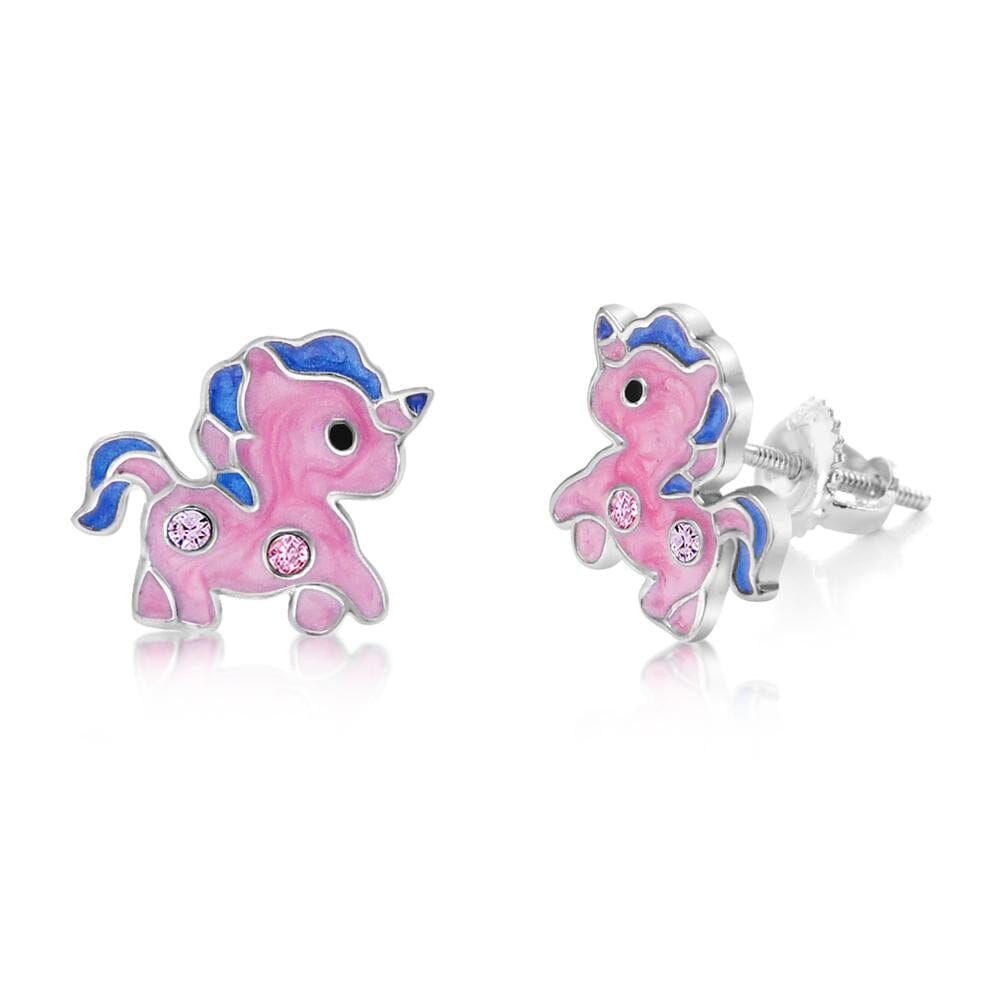
The earring backing affects security, comfort and how easy the pair is to put on. There is no single backing that is best for every child, but some are better suited to particular styles and ages.
|
Backing |
Advantages |
Points to Consider |
|
Screw back |
Designed to remain secure and less likely to slide off accidentally |
Must be fitted correctly and should not be overtightened |
|
Flat back |
Sits close to the ear and can feel comfortable behind the earlobe |
Should be correctly sized and fitted |
|
Leverback |
Uses a hinged closure and works well with small hanging designs |
Moves more than a stud and may suit older children better |
|
Latch-back hoop |
Closure is built into the hoop |
Larger hoops may catch on clothing or hair |
|
Butterfly back |
Easy to use and widely available |
May loosen or press against the ear if fitted too tightly |
For parents searching for kids earrings that won’t fall out easily, screw backs and secure leverbacks are useful options to consider. However, the correct fit matters just as much as the type of closure.
A screw back should sit securely without pinching the earlobe. It should also be checked periodically, particularly after sleep, bathing or active play. Parents can compare screw back earrings and leverback earrings for children before choosing.
How to Choose the Right Earring Size and Weight
Product images can make it difficult to judge an earring’s actual size. Always check the listed measurements instead of relying only on how large the design appears on the screen.
For younger children, small and lightweight earrings generally place less pressure on the piercing and are less likely to catch. The decorative front should sit comfortably on the lobe without covering most of it, and the post should not be so long that it repeatedly catches on hair or clothing.
Weight becomes particularly important with hoops and dangle earrings. A style can be small but still feel heavy if it contains a thick setting or several decorative elements.
If measurements or weight are not listed, contact the retailer before purchasing.
Choosing Earrings for School, Play and Special Occasions
A child may need different earrings for different parts of their routine.
Small studs are usually the simplest choice for ordinary school days because they sit close to the ear. Parents should still check the school’s jewelry policy, as some schools do not allow earrings during physical education or sports.
For birthdays, holidays and other special occasions, children may enjoy colorful star earrings, hearts, flowers or unicorn earrings. Decorative earrings should remain lightweight and securely fastened.
Be mindful of anything that could catch on the earrings. Scarves, hats, costumes, headphones and tangled hair may pull on hoops or raised designs. Earrings may also need to be removed for certain sports and activities, depending on the rules and whether the piercing has fully healed.
What to Know Before a Child’s First Ear Piercing
Before arranging a child’s first piercing, research the provider and ask questions about their training, equipment and hygiene procedures. A reputable professional should explain the process, the jewelry being used, expected healing time and appropriate aftercare.
The Association of Professional Piercers recommends looking for a provider who uses sterile, disposable equipment and can explain their sterilization process. Parents should also ask about the exact grade, size, and style of the initial jewelry.
Initial earrings should not be changed simply to match an outfit. Leave them in place for the full healing period unless a qualified piercer or healthcare professional advises otherwise.
The child’s piercer should remain the main source of advice because healing time and aftercare can vary.
How to Clean and Care for Kids Earrings
Caring for a new piercing is different from cleaning removable earrings worn in a fully healed piercing.
Caring for a New Piercing
Always follow the aftercare instructions provided by the piercer. The Association of Professional Piercers recommends a sterile saline wound wash containing 0.9% sodium chloride and warns against over-cleaning or using harsh products.
During healing:
-
Wash hands before touching the area
-
Avoid unnecessarily twisting or moving the jewelry
-
Do not remove the initial earrings too soon
-
Avoid alcohol, hydrogen peroxide, and other harsh cleaning products
-
Keep cosmetics, lotions and sprays away from the piercing
-
Ask the piercer for advice if the jewelry feels too tight or uncomfortable
Do not use contact lens saline, eye drops or homemade salt mixtures unless a qualified professional specifically recommends them.
Cleaning Earrings After the Piercing Has Healed
Once the piercing is fully healed and the earrings can be removed safely, follow the care instructions for the specific metal, plating and stones.
Use a gentle cleaning method that will not damage the finish. Dry the earrings thoroughly before storing or reinserting them, and inspect the posts, stones and backings for damage.
Do not use abrasive cleaners or strong chemicals on plated jewelry. These products may wear down the finish and expose the metal underneath.
Signs That an Earring May Be Irritating Your Child’s Ear
Occasional mild sensitivity does not necessarily mean a child has an allergy or infection. However, parents should pay attention to changes around the piercing.
Possible warning signs include:
-
Persistent redness or swelling
-
Itching, a rash or flaky skin
-
Increasing pain or tenderness
-
Warmth around the piercing
-
Unusual discharge
-
An earring or backing becoming embedded
-
Redness that spreads beyond the piercing
Do not automatically remove jewelry from a new or potentially infected piercing without advice. If symptoms persist or worsen, contact the child’s pediatrician, another qualified healthcare professional or an experienced piercer.
Seek professional help promptly if an earring or backing becomes embedded in the ear.
This article provides general information and is not a substitute for medical advice.
How to Buy Kids Earrings Online
A clear product description is one of the best signs that a retailer understands children’s jewelry. Before placing an order, check:
-
The complete material description
-
The materials used for the post and backing
-
Whether the jewelry is described as lead-, nickel- and cadmium-free
-
The earring’s measurements
-
The type of closure
-
The recommended age range
-
Cleaning and care instructions
-
The retailer’s returns policy
-
Customer reviews mentioning comfort, fit and durability
Avoid children’s earrings made from unspecified metals, even if the design is cute or the price is low. The U.S. Consumer Product Safety Commission has recalled children’s jewelry containing excessive lead and prohibited levels of cadmium, making clear material information particularly important.
Ready to start comparing styles? Explore Chanteur’s kids earrings by age, backing, color and design.
Frequently Asked Questions About Kids Earrings
What Type of Earrings Are Best for Children?
The best kids earrings are lightweight, appropriately sized and made from clearly identified materials. Look for smooth edges, a comfortable post and a closure suited to the child’s age. The right choice also depends on whether the piercing is new or fully healed.
What Kind of Earrings Are Best for Toddlers?
Small, lightweight studs with smooth edges are often practical earrings for toddlers. A secure, properly fitted backing may make the pair less likely to loosen. Parents should also follow the child’s piercer’s advice and supervise young children appropriately.
Are Screw Back Earrings Better for Kids?
Screw backs are popular because the backing threads onto the post instead of sliding into place. This can make them harder to lose accidentally. However, they need to fit correctly and should not be tightened against the earlobe.
What Earrings Are Least Likely to Fall Out?
Properly fitted screw backs, flat backs, leverbacks and locking closures may be less likely to fall out than loose friction backs. No closure is completely loss-proof, so parents should check the earrings regularly.
Can Children Sleep in Earrings?
This depends on whether the piercing is still healing and whether the jewelry is correctly fitted. Initial jewelry usually needs to remain in place during healing. For a healed piercing, low-profile earrings may feel more comfortable, but parents should follow advice from the child’s piercer.
How Can Parents Tell Whether Earrings Contain Nickel?
Read the complete product specifications and check the post and backing as well as the decorative front. If the materials are unclear, contact the retailer before buying. A “hypoallergenic” label alone does not provide a complete list of materials.
How Often Should Children’s Earrings Be Cleaned?
New piercings should be cared for according to the piercer’s instructions. For healed piercings, clean the earrings whenever buildup appears and before reinserting a pair that has been stored. Always use a method suitable for the earring’s metal and finish.
Find Safe, Comfortable Earrings Your Child Will Love
Choosing children’s earrings becomes much easier when parents focus on a few practical details: material, size, weight, backing and age. The right pair should feel comfortable, stay securely in place and suit the child’s routine as well as their personality.
Explore Chanteur’s collection of kids earrings to shop by age, style, color and design.


0 comments